The finance industry is rapidly embracing Artificial Intelligence (AI), Digital Banking, Blockchain, Data Analytics, Cloud Computing, and Financial Automation, creating exciting career opportunities for professionals with expertise in both finance and technology. As organizations increasingly adopt digital financial solutions, the demand for skilled FinTech professionals continues to rise across banking, investment, insurance, and corporate finance.
A FinTech & Financial Planning Course equips students and professionals with practical knowledge of financial planning, digital banking, investment management, financial analytics, and emerging technologies. Whether you have completed 12th, graduation, or are already working, this course can open doors to high-growth and future-ready careers.
This comprehensive guide explores the top career opportunities after a FinTech & Financial Planning Course, expected salaries, required skills, industries hiring, and the future scope of FinTech in 2026.
Why FinTech is One of the Fastest-Growing Career Fields
Financial services are evolving beyond traditional banking. Customers expect instant digital payments, AI-powered financial advice, mobile banking, and secure online transactions. Businesses need professionals who can combine financial expertise with technology to deliver innovative solutions.
Reasons Behind the Growing Demand
- Expansion of Digital Banking
- Growth of UPI & Cashless Payments
- AI in Financial Services
- Blockchain Adoption
- Online Investment Platforms
- Financial Data Analytics
- Financial Automation
- Increased Cybersecurity Requirements
- Government Push Towards Digital Economy
These developments are creating thousands of new job opportunities every year.
What Will You Learn in a FinTech & Financial Planning Course?
A professional FinTech program provides practical, industry-focused skills including:
Finance Skills
- Financial Planning
- Investment Planning
- Wealth Management
- Personal Finance
- Financial Markets
- Budgeting
- Risk Management
Technology Skills
- Digital Banking
- UPI & Digital Payments
- Blockchain Fundamentals
- AI in Finance
- Financial Automation
- Cloud-Based Financial Systems
Analytics Skills
- Advanced Excel
- Financial Reporting
- Business Analytics
- Dashboard Creation
- Data Interpretation
- Financial Decision Making
Professional Skills
- Communication
- Problem Solving
- Client Relationship Management
- Business Ethics
- Presentation Skills
Top Career Opportunities After a FinTech & Financial Planning Course
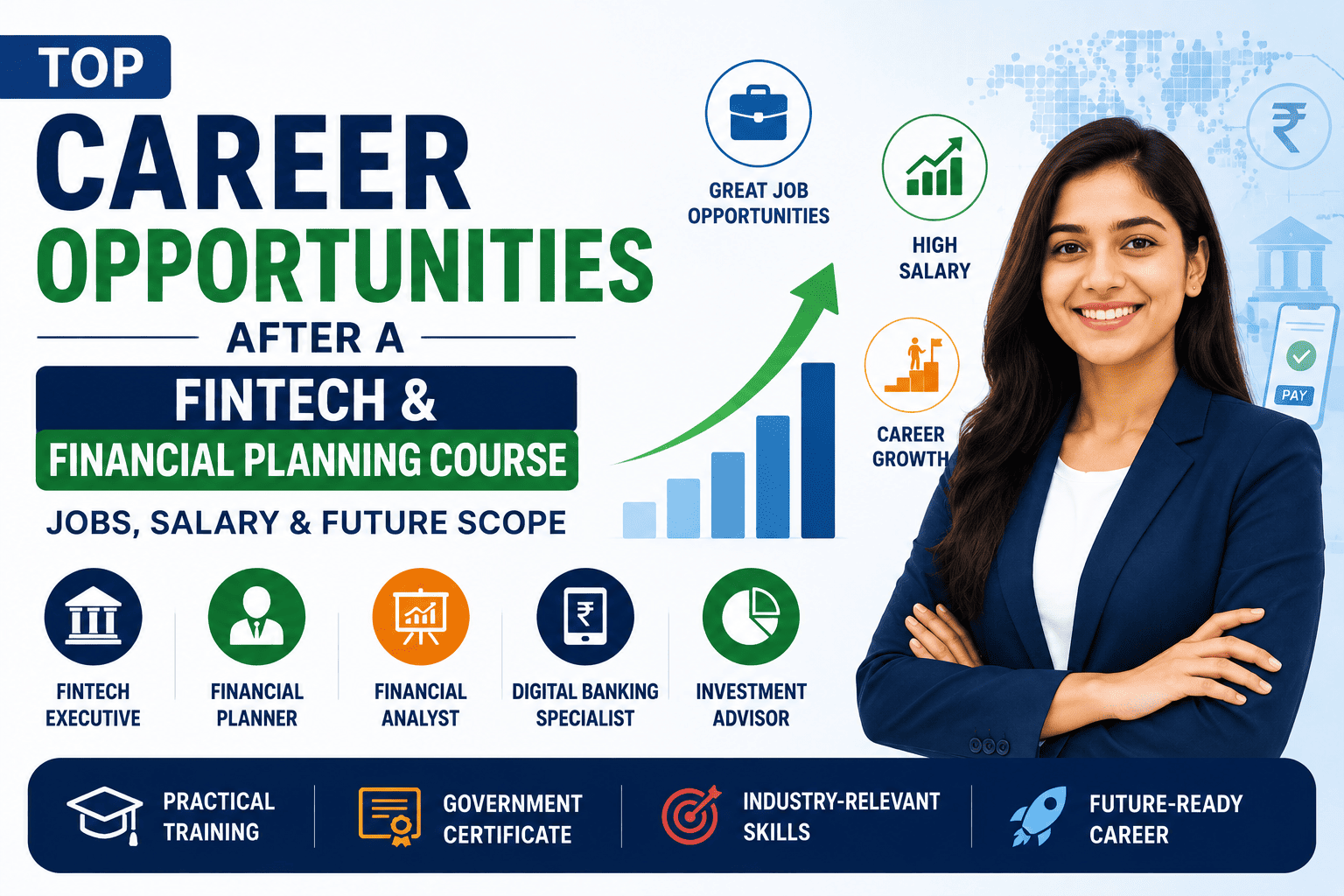
1. FinTech Executive
A FinTech Executive supports digital financial operations, payment platforms, financial software implementation, and customer onboarding.
Key Responsibilities
- Digital banking support
- Payment processing
- Customer engagement
- Financial product assistance
Average Salary
₹3.5–6 LPA
2. Financial Planner
Financial Planners help individuals and businesses achieve their financial goals through budgeting, investment planning, insurance, and retirement strategies.
Responsibilities
- Goal-based financial planning
- Investment guidance
- Tax-efficient planning
- Wealth management
Average Salary
₹4–8 LPA
3. Financial Analyst
Financial Analysts evaluate business performance, prepare financial reports, analyze trends, and support strategic decision-making.
Skills Required
- Financial Analysis
- Advanced Excel
- Financial Modeling
- Reporting
- Business Intelligence
Salary
₹5–10 LPA
4. Digital Banking Executive
Digital Banking Executives assist customers with online banking services, digital payment solutions, and technology-enabled financial products.
Salary
₹3.5–7 LPA
5. Investment Advisor
Investment Advisors recommend suitable investment products such as mutual funds, SIPs, stocks, bonds, and retirement plans based on client goals and risk profiles.
Salary
₹4–10 LPA
6. Wealth Management Associate
Professionals in wealth management help high-net-worth individuals manage investments, taxes, estate planning, and long-term financial growth.
Salary
₹5–12 LPA
7. Credit Analyst
Credit Analysts assess the financial health of individuals and businesses to evaluate loan eligibility and credit risk.
Salary
₹4–8 LPA
8. Risk Management Executive
Risk Management professionals identify financial risks, recommend mitigation strategies, and ensure regulatory compliance.
Salary
₹5–10 LPA
9. Insurance & Financial Consultant
These professionals advise clients on insurance products, financial protection, retirement planning, and long-term wealth creation.
Salary
₹3.5–8 LPA
10. Business Analyst (Finance)
Business Analysts bridge the gap between finance and technology by analyzing processes, improving systems, and supporting digital transformation projects.
Salary
₹6–12 LPA
Emerging Career Opportunities in FinTech
As the industry evolves, several new roles are gaining popularity:
- AI Finance Specialist
- Blockchain Consultant
- Digital Payments Specialist
- Financial Data Analyst
- Financial Product Manager
- Compliance Analyst
- RegTech Consultant
- Financial Technology Consultant
- Robo-Advisory Specialist
- Digital Lending Executive
These roles are expected to witness strong demand over the coming years.
Industries Hiring FinTech Professionals
After completing a FinTech & Financial Planning Course, you can explore opportunities in:
- Public Sector Banks
- Private Banks
- NBFCs
- FinTech Startups
- Investment Firms
- Mutual Fund Companies
- Insurance Companies
- Wealth Management Firms
- Corporate Finance Departments
- IT Companies
- Financial Consulting Firms
- Stock Broking Companies
- Payment Gateway Companies
- Digital Banking Platforms
- Government Financial Institutions
Salary Comparison by Experience
| Experience Level | Average Salary |
|---|---|
| Freshers | ₹3.5–6 LPA |
| 2–5 Years | ₹6–12 LPA |
| 5–10 Years | ₹10–18 LPA |
| Senior Professionals | ₹18–30+ LPA |
Professionals who continuously upskill with Advanced Excel, Power BI, Data Analytics, AI, and Financial Modeling often command higher salaries and faster promotions.
Skills That Increase Your Salary
To improve your earning potential, develop expertise in:
- Financial Planning
- Advanced Excel
- Power BI
- Business Analytics
- Data Visualization
- Investment Analysis
- AI in Finance
- Financial Reporting
- Digital Banking
- Blockchain Fundamentals
- Communication Skills
- Client Relationship Management
Future Scope of FinTech Careers
The future of FinTech is driven by technological innovation and increasing demand for digital financial services. Organizations are investing heavily in AI-powered advisory platforms, blockchain-based solutions, digital payment systems, and financial analytics to improve customer experience and operational efficiency.
As a result, professionals with expertise in finance, technology, and analytics are expected to remain highly sought after in banking, insurance, investment management, consulting, and corporate finance.
Career Roadmap
Beginner Level
- Financial Fundamentals
- Personal Finance
- Digital Banking
- Investment Basics
Intermediate Level
- Financial Planning
- Advanced Excel
- Business Analytics
- Financial Reporting
Advanced Level
- Power BI
- Financial Modeling
- AI in Finance
- Blockchain
- Wealth Management
Senior Roles
- Financial Analyst
- Investment Consultant
- FinTech Specialist
- Business Analyst
- Finance Manager
- Product Manager (FinTech)
- Wealth Management Consultant
Why Choose a Government-Certified FinTech Course?
A government-certified FinTech program provides industry-recognized credentials, practical exposure, and a curriculum aligned with current financial technologies. Combined with hands-on projects, financial analytics, and digital banking concepts, it prepares learners for diverse opportunities in the rapidly evolving financial services sector.
Frequently Asked Questions (FAQs)
1. What career opportunities are available after a FinTech & Financial Planning Course?
Graduates can pursue roles such as FinTech Executive, Financial Planner, Financial Analyst, Digital Banking Executive, Investment Advisor, Wealth Management Associate, Business Analyst, Credit Analyst, and Risk Management Executive.
2. What is the average salary after completing a FinTech course?
Freshers typically earn ₹3.5–6 LPA, while experienced professionals with specialized skills can earn ₹12–30+ LPA, depending on their role, expertise, and employer.
3. Is FinTech a good career in 2026?
Yes. FinTech is one of the fastest-growing sectors due to increasing adoption of AI, digital banking, online payments, financial analytics, and blockchain technologies.
4. Can commerce students pursue a FinTech career?
Absolutely. Commerce students have a strong foundation in finance and accounting, making them well-suited for FinTech careers. Students from Science, Arts, Engineering, and Management backgrounds can also enroll.
5. Do I need coding knowledge to work in FinTech?
No. Many FinTech roles focus on financial planning, digital banking, analytics, and customer advisory rather than software development. However, learning technology concepts can broaden career opportunities.
6. Which additional skills improve career prospects?
Learning Advanced Excel, Power BI, Financial Analytics, Data Visualization, AI in Finance, and Business Intelligence alongside FinTech significantly enhances employability and salary potential.
7. Which industries hire FinTech professionals?
Banks, NBFCs, insurance companies, FinTech startups, investment firms, mutual fund companies, consulting firms, IT companies, payment gateway providers, and multinational corporations actively recruit FinTech professionals.
8. Why should I choose a FinTech & Financial Planning Course in Ahmedabad?
Ahmedabad offers access to quality training institutes, industry-focused programs, practical learning, government-certified courses, and a growing ecosystem of financial services and technology companies. It is an excellent destination for building a career in modern finance.
Conclusion
The FinTech industry is transforming how financial services are delivered, creating exciting career opportunities for professionals who combine finance knowledge with technology and analytics. Completing a FinTech & Financial Planning Course equips you with practical skills in digital banking, investment planning, financial analytics, AI-enabled finance, and emerging financial technologies, making you a valuable asset in today’s job market.
Whether you aspire to become a Financial Analyst, FinTech Executive, Investment Advisor, Wealth Management Professional, Business Analyst, or Digital Banking Specialist, this career path offers excellent salary potential, diverse job opportunities, and long-term growth. By complementing your FinTech expertise with Advanced Excel, Power BI, Data Analytics, and Financial Reporting, you can build a future-ready profile and confidently pursue rewarding careers across banking, corporate finance, consulting, investment management, insurance, and global financial technology organizations.