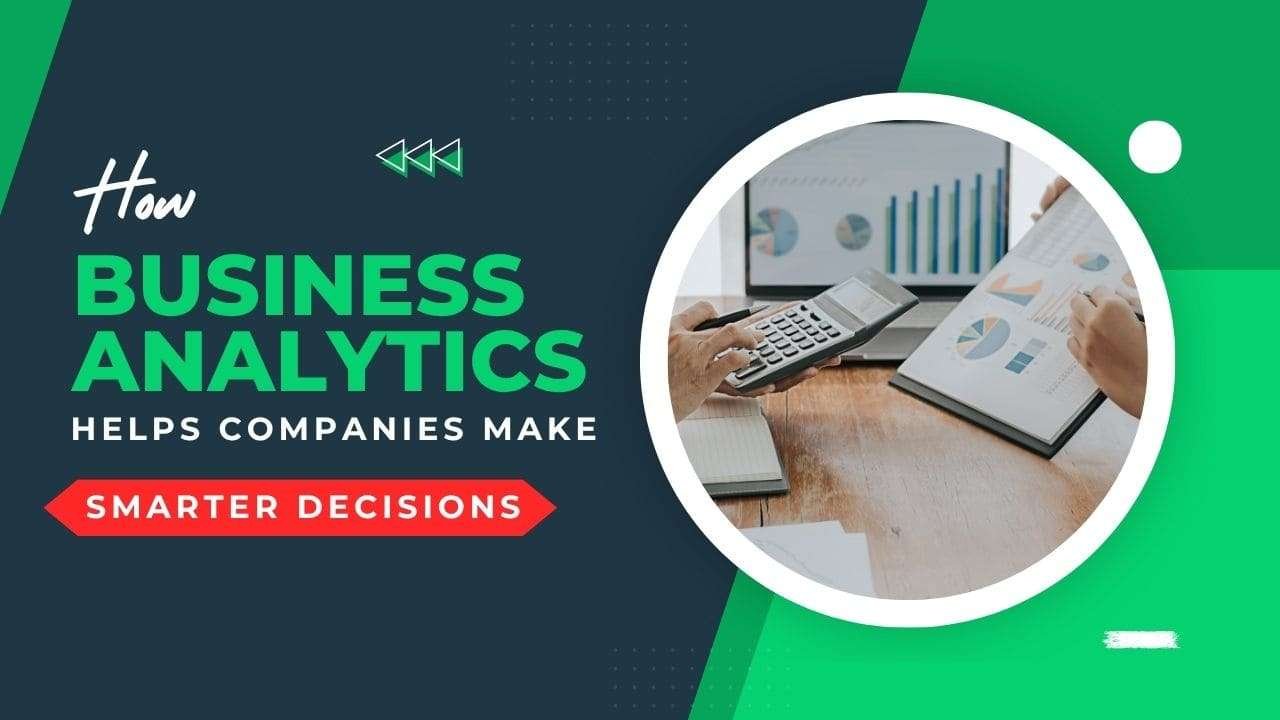
In today’s data-driven world, businesses no longer rely on guesswork or intuition. Every click, purchase, and customer interaction generates valuable data. But data alone doesn’t create success — the key lies in analyzing it effectively. That’s where Business Analytics comes in.
Business Analytics helps organizations transform raw data into meaningful insights, enabling smarter, faster, and more strategic decisions. Let’s explore how analytics is reshaping the way companies operate, compete, and grow.
1. What is Business Analytics?
Business Analytics (BA) is the process of collecting, processing, and interpreting data to make better business decisions. It combines statistical analysis, data visualization, and predictive modeling to uncover patterns, identify opportunities, and forecast future trends.
There are mainly four types of Business Analytics:
- Descriptive Analytics – What happened?
Example: Monthly sales reports or website traffic summaries. - Diagnostic Analytics – Why did it happen?
Example: Analyzing why sales dropped in a particular region. - Predictive Analytics – What could happen next?
Example: Forecasting next month’s demand using historical data. - Prescriptive Analytics – What should we do next?
Example: Recommending marketing strategies to boost conversions.
Together, these insights help organizations make data-backed decisions that minimize risk and maximize results.
2. Turning Data into Actionable Insights
Most businesses collect data — from sales transactions, customer feedback, website clicks, and even social media engagement. But without proper analysis, this data remains an untapped resource.
Business Analytics tools like Power BI, Tableau, Google Data Studio, and Excel help companies organize and visualize this data, turning it into clear, actionable insights.
For example:
- A retail brand can identify which products sell best in which regions.
- A hospital can analyze patient data to improve treatment outcomes.
- A marketing agency can track campaign performance in real time.
By turning numbers into stories, analytics helps decision-makers take the right action at the right time.
3. Improving Business Efficiency
Analytics helps companies optimize their processes, operations, and resources.
For instance:
- Manufacturing firms use analytics to predict equipment maintenance needs, reducing downtime.
- E-commerce companies analyze supply chain data to manage inventory efficiently.
- Banks and financial firms use fraud detection analytics to prevent losses.
With the right data insights, companies can identify inefficiencies, reduce costs, and improve overall productivity.
4. Enhancing Customer Understanding
Customers are the heart of any business. Analytics helps companies understand them better than ever before.
By studying customer behavior — what they buy, when they buy, and how they interact — businesses can:
- Personalize marketing campaigns
- Offer better customer experiences
- Improve product recommendations
- Predict customer churn and take preventive action
For example, Netflix uses data analytics to recommend shows based on users’ viewing history, increasing engagement and satisfaction. Similarly, Amazon analyzes past purchases to suggest relevant products, boosting sales.
5. Data-Driven Marketing Strategies
Gone are the days of “one-size-fits-all” marketing. Today, every successful campaign is backed by analytics.
Business Analytics helps marketers:
- Identify the most profitable customer segments
- Measure campaign performance in real-time
- Optimize ad spend based on conversion rates
- Track ROI and adjust strategies instantly
Using tools like Google Analytics, Facebook Insights, and HubSpot, companies can analyze website traffic, engagement, and customer journeys — turning every click into an opportunity to learn and improve.
6. Predicting Future Trends
One of the most powerful benefits of Business Analytics is forecasting.
Predictive analytics uses machine learning and historical data to anticipate what might happen next. Businesses can:
- Forecast demand and adjust inventory
- Predict customer behavior
- Estimate financial performance
- Identify potential risks
For example, airlines use predictive analytics to set ticket prices dynamically, while financial institutions use it to assess credit risk. These forward-looking insights help companies stay ahead of competitors.
7. Supporting Strategic Decision-Making
Business leaders no longer have to rely on assumptions. With analytics, they can validate ideas with data.
Analytics-driven decision-making ensures:
- Better risk management
- Clearer performance measurement
- Faster, evidence-based decisions
- Alignment between business goals and outcomes
In simple terms, analytics bridges the gap between data and decision-making, making organizations more agile and confident in their strategies.
8. Real-World Example: How Analytics Transforms Businesses
- Retail: Walmart uses analytics to monitor sales patterns and optimize inventory in real time.
- Finance: Banks use data analytics to detect fraud and improve credit scoring.
- Healthcare: Hospitals use patient data to improve diagnoses and treatment plans.
- Education: Institutes analyze student data to improve teaching outcomes and retention rates.
No matter the industry, data-driven decision-making has become the foundation of success.
9. Learning Business Analytics as a Student
With businesses increasingly relying on data, Business Analytics has become one of the most in-demand career skills. Students who master tools like Excel, Power BI, Tableau, and SQL gain a competitive edge in fields like marketing, finance, and management.
Institutes like Tally Prime Course in Ahmedabad offer practical, project-based learning where students work with real datasets, dashboards, and reports — preparing them for actual industry roles.
10. Conclusion
Business Analytics is no longer a luxury — it’s a necessity for smart decision-making. Whether it’s optimizing operations, predicting trends, or improving customer satisfaction, analytics helps companies move from guesswork to clarity.
In a world where every decision counts, those who understand data hold the power to lead.
If you’re a student or professional aiming to build a career in data and decision-making, now is the perfect time to learn Business Analytics and become the brain behind smarter business strategies.