The financial services industry is experiencing one of its biggest transformations in history. Traditional banking is rapidly adopting digital technologies such as Artificial Intelligence (AI), blockchain, cloud computing, digital payments, and data analytics. This evolution has created two promising career paths: Banking and Financial Technology (FinTech).
Many students and graduates often ask, “Should I choose a Banking course or a FinTech course?” The answer depends on your career goals, interests, and the skills you want to develop.
In this guide, we’ll compare Banking and FinTech careers based on job opportunities, salary, required skills, course curriculum, career growth, and future demand, helping you make the right decision for 2026.
What is a Banking Career?
A banking career focuses on financial services offered by public sector banks, private banks, cooperative banks, NBFCs, and financial institutions.
Professionals in banking manage customer accounts, loans, deposits, investments, compliance, and financial transactions while ensuring smooth banking operations.
Popular Banking Job Roles
- Bank Clerk
- Probationary Officer (PO)
- Relationship Manager
- Loan Officer
- Credit Analyst
- Branch Operations Executive
- Banking Executive
- Customer Relationship Officer
- Wealth Management Executive
What is a FinTech Career?
FinTech (Financial Technology) combines finance with digital innovation. It focuses on technology-driven financial services such as digital banking, mobile payments, online lending, blockchain, robo-advisory, wealth management, and financial analytics.
FinTech professionals help organizations build smarter, faster, and more secure financial solutions.
Popular FinTech Job Roles
- FinTech Executive
- Financial Analyst
- Digital Banking Specialist
- Investment Advisor
- Product Analyst
- Risk Analyst
- Financial Planning Consultant
- Business Analyst
- Wealth Management Associate
- Payment Solutions Executive
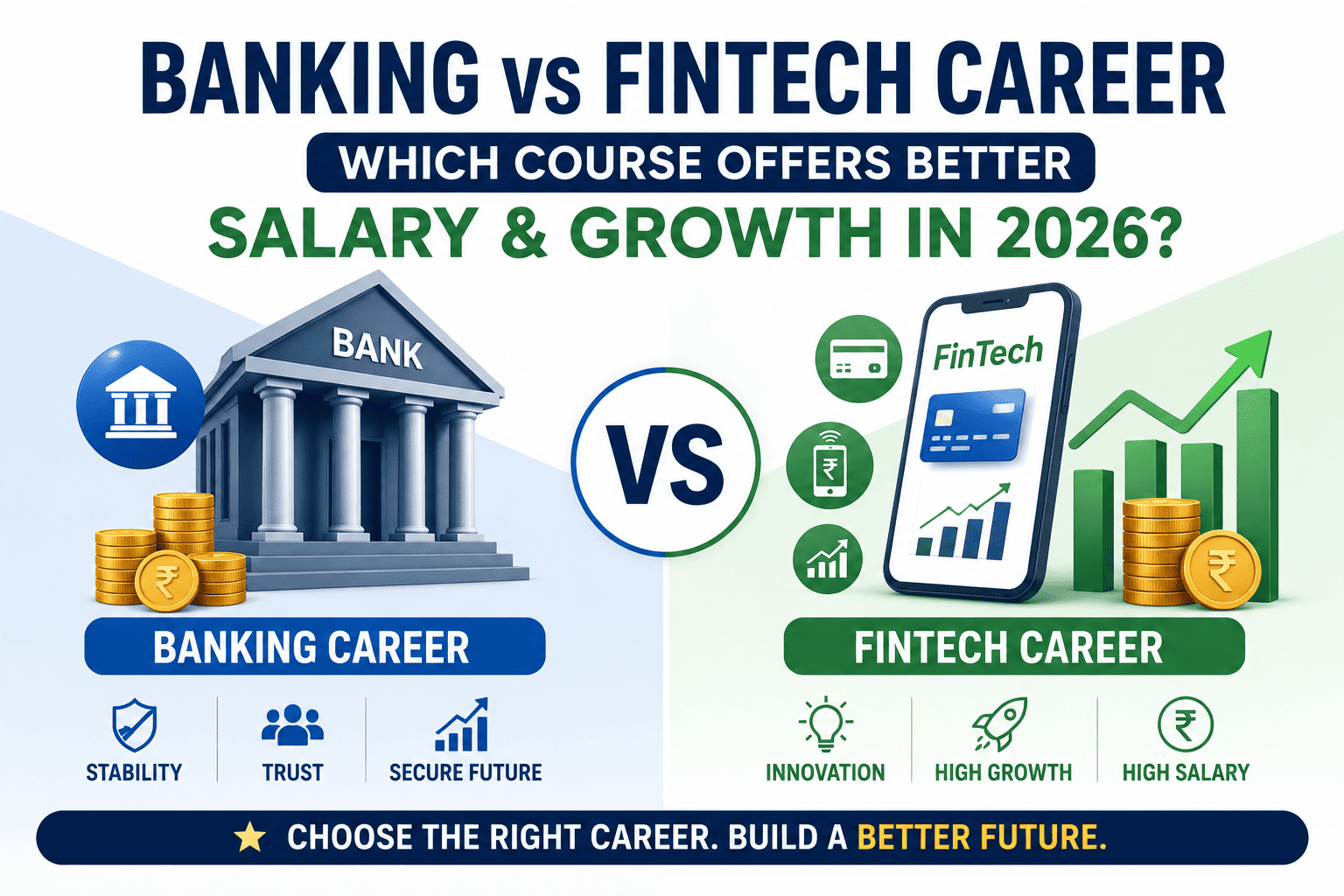
Banking vs FinTech: Quick Comparison
| Feature | Banking Career | FinTech Career |
|---|---|---|
| Industry | Traditional Financial Services | Technology-Driven Finance |
| Demand | High | Very High |
| Innovation | Moderate | High |
| Technology Usage | Moderate | Extensive |
| Career Growth | Stable | Rapid |
| Global Opportunities | Good | Excellent |
| AI & Automation Exposure | Limited | High |
| Salary Potential | Good | Excellent |
Skills Required for Banking Careers
Banking professionals need a combination of financial knowledge and customer service skills.
Core Skills
- Banking Operations
- Financial Accounting
- Customer Service
- Loan Processing
- Credit Analysis
- Compliance
- Communication Skills
- Financial Regulations
- Sales & Relationship Management
Skills Required for FinTech Careers
FinTech professionals require both finance knowledge and digital technology skills.
In-Demand Skills
- Financial Planning
- Digital Banking
- AI in Finance
- Blockchain Basics
- Data Analytics
- Advanced Excel
- Power BI
- Financial Reporting
- Investment Planning
- Business Intelligence
- Problem Solving
Course Curriculum Comparison
Banking Course Covers
- Banking Operations
- RBI Guidelines
- Loans & Advances
- Deposit Management
- Financial Products
- Banking Regulations
- Customer Service
- Risk Management
FinTech Course Covers
- Digital Banking
- Financial Planning
- UPI & Digital Payments
- Blockchain Fundamentals
- AI in Finance
- Investment Planning
- Financial Analytics
- Advanced Excel
- Power BI Basics
- Business Intelligence
- Financial Technology
Salary Comparison
| Experience | Banking | FinTech |
|---|---|---|
| Freshers | ₹3–5 LPA | ₹4–7 LPA |
| 2–5 Years | ₹5–8 LPA | ₹7–12 LPA |
| Experienced Professionals | ₹8–15 LPA | ₹12–20+ LPA |
Key Insight: FinTech roles often offer higher earning potential because they combine financial expertise with technology and analytics skills.
Career Growth Comparison
Banking Career Growth
Career progression in banking typically follows a structured path:
- Banking Executive
- Senior Officer
- Branch Manager
- Regional Manager
- General Manager
Growth is generally steady and based on experience, performance, and internal promotions.
FinTech Career Growth
Career advancement in FinTech is often faster due to the industry’s rapid expansion.
Possible career progression includes:
- FinTech Executive
- Financial Analyst
- Product Specialist
- Business Analyst
- FinTech Consultant
- Product Manager
- Finance Technology Manager
Professionals who continuously upskill in analytics, AI, and digital finance often progress more quickly.
Which Industry Has Better Future Scope?
Banking
The banking industry remains essential and continues to provide stable employment opportunities. Banks are increasingly investing in digital transformation, requiring professionals with updated technical skills.
Best For
- Candidates seeking structured career progression
- Those interested in customer relationship management
- Aspirants preparing for banking recruitment exams
FinTech
The FinTech sector is growing rapidly due to digital payments, online investments, mobile banking, AI-powered financial services, and financial inclusion initiatives.
Best For
- Technology enthusiasts
- Students interested in innovation
- Professionals seeking high-growth careers
- Individuals interested in financial analytics and digital finance
Why FinTech is Growing Faster in 2026
Several trends are driving demand for FinTech professionals:
- Growth of digital payment platforms
- Increased adoption of AI in finance
- Expansion of online banking services
- Rising demand for financial analytics
- Greater focus on cybersecurity
- Increased use of blockchain technology
- Growth in digital lending and wealth management
These developments are creating diverse career opportunities for professionals with finance and technology skills.
Banking vs FinTech: Which Course Should You Choose?
Choose Banking If You Want:
- A stable career in traditional banking
- Opportunities in public and private sector banks
- Customer-facing financial roles
- Structured promotions and long-term growth
Choose FinTech If You Want:
- Higher salary potential
- Technology-driven finance careers
- Skills in AI, analytics, and digital banking
- Faster career progression
- Opportunities in startups, global companies, and financial technology firms
Can You Learn Both?
Yes. Combining banking knowledge with FinTech skills can make your profile significantly stronger.
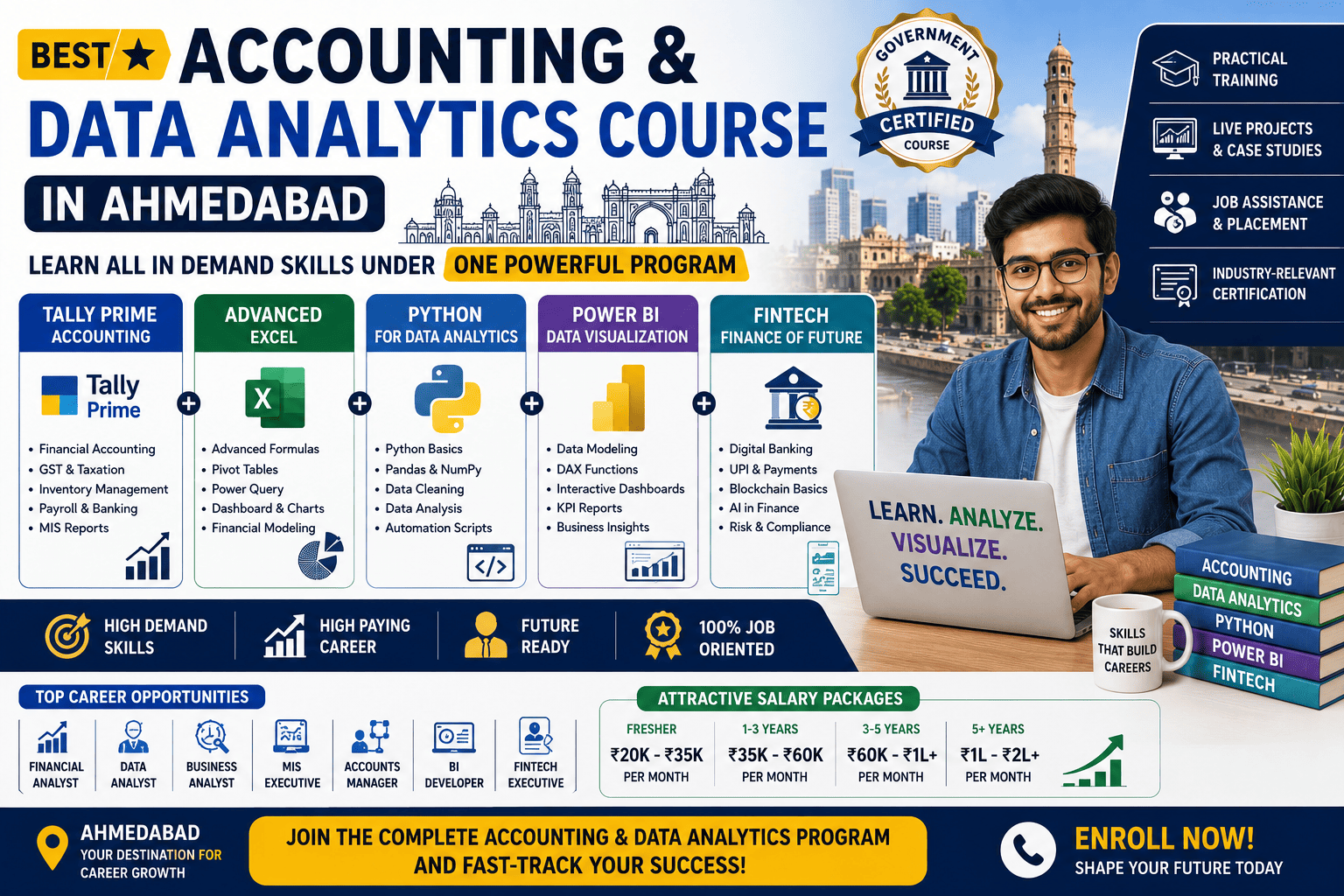
A recommended learning path is:
- Banking Fundamentals
- Finance & Accounting
- Advanced Excel
- Power BI
- FinTech & Financial Planning
This combination prepares you for roles that bridge traditional banking and modern financial technology.
Industries Hiring Banking & FinTech Professionals
Graduates can find opportunities in:
- Public Sector Banks
- Private Banks
- NBFCs
- FinTech Companies
- Insurance Firms
- Mutual Fund Companies
- Investment Advisory Firms
- Wealth Management Companies
- Financial Consulting Firms
- Stock Broking Companies
- Corporate Finance Departments
- IT Companies
- Global Financial Services Organizations
Benefits of Choosing a Government-Certified FinTech Course
A government-certified FinTech course helps learners gain practical knowledge, industry-recognized credentials, and hands-on experience with modern financial tools. Combined with skills in Advanced Excel, financial analytics, and digital banking, such certification enhances employability and prepares candidates for emerging opportunities in the financial sector.
Frequently Asked Questions (FAQs)
1. Which career offers a higher salary: Banking or FinTech?
FinTech generally offers higher salary potential because it combines finance with technology, analytics, and digital innovation.
2. Is FinTech better than Banking?
Both careers have advantages. Banking offers structured career growth and stability, while FinTech provides faster growth, broader career options, and higher earning potential for professionals with in-demand technical skills.
3. Can commerce students pursue a FinTech course?
Yes. Commerce students are well-positioned to learn FinTech because they already have a foundation in finance and accounting. Students from Science, Arts, Engineering, and Management backgrounds can also enroll.
4. Is coding required for a FinTech career?
Not necessarily. Many beginner and intermediate FinTech roles focus on finance, digital banking, analytics, and financial planning rather than programming. However, technical skills can be an added advantage for specialized roles.
5. Which course is better after graduation?
Graduates who want to work in modern financial services often benefit from a combination of Finance & Accounting, Advanced Excel, Power BI, and FinTech to develop practical and analytical skills.
6. What are the top skills employers look for in 2026?
Employers value professionals with expertise in financial planning, digital banking, Advanced Excel, Power BI, data analytics, AI-enabled finance, communication, and problem-solving.
7. Is FinTech a good career for the future?
Yes. With the continued growth of digital payments, AI-driven financial services, online investments, and financial technology platforms, FinTech is expected to remain one of the fastest-growing career sectors.
8. Can I switch from Banking to FinTech later?
Yes. Many banking professionals transition into FinTech by upskilling in digital banking, financial analytics, Advanced Excel, Power BI, AI, and financial planning. This combination can open opportunities in technology-driven financial organizations.
Conclusion
Both Banking and FinTech offer rewarding careers, but they cater to different professional aspirations. Banking continues to provide stable employment, structured career progression, and opportunities across public and private financial institutions. FinTech, on the other hand, is reshaping the financial industry by integrating technology, analytics, and digital innovation, resulting in faster career growth and strong salary potential.
If your goal is to build a future-ready career, combining traditional finance knowledge with modern tools such as Advanced Excel, Power BI, Financial Analytics, and FinTech can significantly enhance your employability. Whether you are a student after 12th, a graduate, or a working professional, developing expertise in both finance and technology will position you for success in the rapidly evolving financial ecosystem of 2026 and beyond.