In today’s digital-first economy, data is no longer just a support function—it has become a powerful growth engine. Businesses that understand and use their data make faster decisions, reduce risks, and identify opportunities before their competitors do.
Data analytics has evolved far beyond basic dashboards and reports. It is now a core strategy for scaling operations, improving customer experience, and increasing profitability.
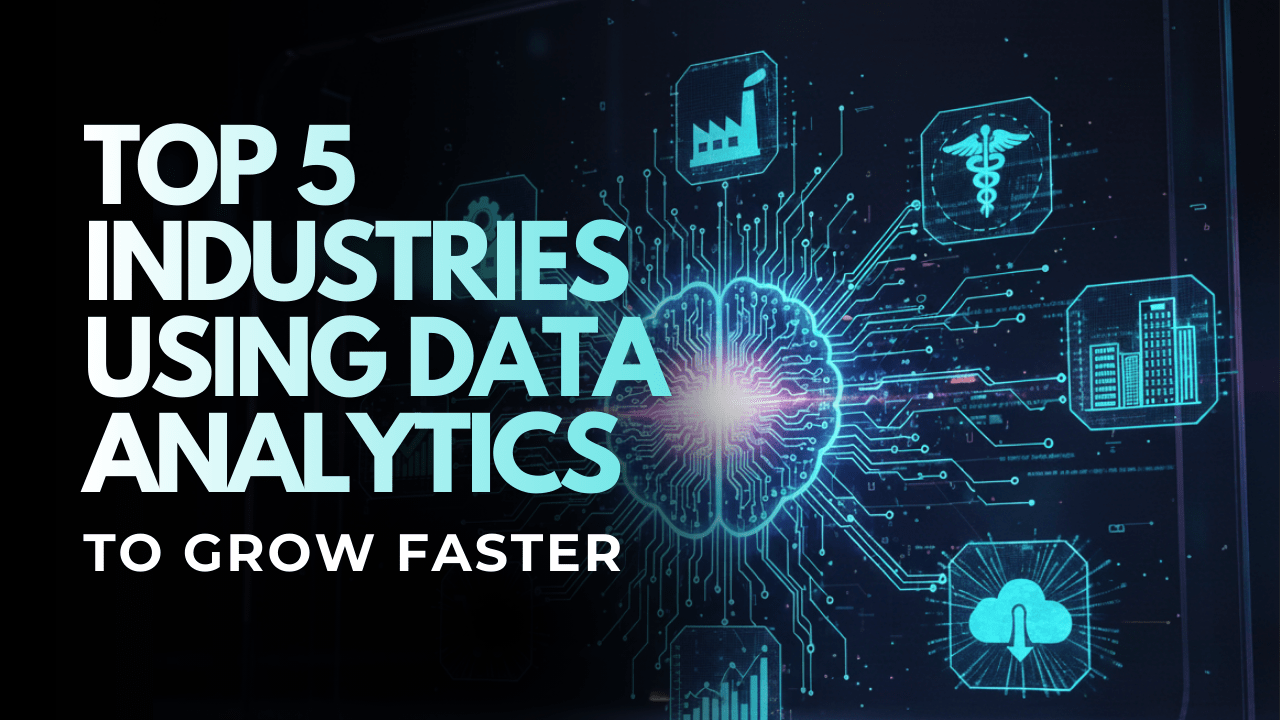
This blog explores the common challenges businesses face without data analytics and highlights the top 5 industries using data analytics to grow faster, with clear explanations of how analytics drives their success.
Common Issues Faced Without Data Analytics
Before understanding which industries are benefiting from data analytics, it’s important to look at the challenges businesses face when data is not part of their strategy.
Decision-Making Based on Guesswork
Without reliable data, organizations rely on intuition rather than facts, leading to inconsistent outcomes.
Poor Customer Understanding
Businesses struggle to identify customer needs, preferences, and behavior patterns.
Inefficient Operations
Lack of performance insights results in wasted resources and higher operational costs.
Delayed Response to Market Changes
Companies react too late to trends, competitor actions, or potential risks.
Limited Scalability
Growth becomes unpredictable, difficult to manage, and hard to sustain over time.
How Data Analytics Solves These Problems
Data analytics enables organizations to:
-
Analyze past performance
-
Predict future outcomes
-
Optimize real-time decision-making
With these capabilities, businesses can shift from reactive decisions to proactive strategies.
Top 5 Industries Using Data Analytics to Grow Faster
1. E-Commerce & Retail
E-commerce and retail businesses rely heavily on data analytics to stay competitive in a crowded market.
How analytics helps:
-
Tracks customer behavior and purchase patterns
-
Enables personalized product recommendations
-
Optimizes pricing and inventory management
Growth impact:
Retailers using data analytics experience higher conversion rates, reduced cart abandonment, and improved customer retention.
2. Healthcare & Pharmaceuticals
Healthcare is becoming increasingly data-driven, improving both patient outcomes and operational efficiency.
How analytics helps:
-
Predicts patient risks and disease trends
-
Improves diagnosis accuracy
-
Optimizes hospital and resource management
Growth impact:
Data-driven healthcare organizations reduce costs, enhance patient care, and scale services more effectively.
3. Banking & Financial Services
Financial institutions generate massive volumes of data daily, making analytics essential for growth and risk management.
How analytics helps:
-
Detects fraud and suspicious transactions
-
Improves credit scoring and risk assessment
-
Personalizes financial products and services
Growth impact:
Banks using advanced analytics experience lower risk exposure, stronger customer trust, and faster digital transformation.
4. Marketing & Advertising
Modern marketing is powered by data rather than assumptions.
How analytics helps:
-
Measures campaign performance in real time
-
Identifies high-performing channels and content
-
Improves audience targeting and return on investment
Growth impact:
Brands that use data analytics reduce ad waste and achieve higher engagement and conversion rates.
5. Manufacturing & Supply Chain
Manufacturing and supply chain operations use data analytics to improve efficiency and reduce downtime.
How analytics helps:
-
Predicts equipment failures before they occur
-
Optimizes production schedules
-
Improves end-to-end supply chain visibility
Growth impact:
Data-driven manufacturers lower operational costs, minimize delays, and scale production faster.
Conclusion
Data analytics has become a critical competitive advantage across industries. From personalized shopping experiences in e-commerce to life-saving insights in healthcare, organizations that use data effectively grow faster, smarter, and more sustainably.
The industries leading today’s growth are not always the biggest—they are the ones making informed, data-backed decisions. As analytics tools become more accessible, businesses of all sizes now have the opportunity to leverage data and accelerate growth in an increasingly competitive market.